
A damaging Trustpilot review can sabotage your business reputation overnight. But amid promises of swift deletions, separating legitimate solutions from outright scams is crucial for protecting your brand and budget.
This guide demystifies official policies and DIY methods, exposes common scams with red flags, evaluates real professional services, and breaks down costs from free to premium-enableing you to act wisely.
Legitimate Removal Options
Trustpilot allows removal of reviews violating their Content Guidelines, with 68% of flagged reviews removed in 2023 per their transparency report, covering spam, fake reviews, and policy breaches. Businesses can flag reviews through the Trustpilot dashboard for legitimate review deletion. This process targets clear violations like spam or impersonation.
Their 2024 transparency report shows 2.4 million reviews processed, highlighting active review moderation. Legitimate options focus on Trustpilot guidelines such as off-topic content or defamatory remarks. Success depends on matching these categories closely.
| Category | Examples | Success Rate | Processing Time | How to Flag |
|---|---|---|---|---|
| Spam/Impersonation | Fake accounts posting identical text, reviews from non-customers | 90% | 24-48 hours | Select “Spam” in dashboard, provide evidence of fake profile |
| Off-topic | Political rants, unrelated sales pitches | 75% | 3-5 days | Choose “Off-topic quote irrelevant parts |
| Defamatory | Personal attacks, false accusations of crime | 65% | 7 days | Flag as “Defamatory attach proof of falsehood |
| Competitor Sabotage | Reviews from rival IPs, suspicious timing | 80% | 48 hours | Report under “Fake note competitor links |
| Prohibited Content | Hate speech, illegal promotions | 85% | 2-4 days | Select “Violates Guidelines screenshot offensive text |
| Self-Promotion | Affiliate links, competitor ads in review | 70% | 4-7 days | Flag “Spam highlight promotional elements |
Use this table for Trustpilot removal planning. Always gather screenshots and details before flagging to boost chances.
Step-by-Step Flagging Process
Log into your Trustpilot business account dashboard first. Find the review under your company page, then click the flag icon next to it. Select the best matching category from the dropdown.
Next, add a detailed explanation in the report form. Include evidence like order numbers for impersonation or links proving off-topic nature. Submit and track status in your review history.
Trustpilot support reviews flags manually after automated checks. Expect replies via email for escalations. This legitimate removal method avoids scams and respects review policy.
- Access dashboard and locate review.
- Click flag and choose violation type.
- Provide evidence and submit.
- Monitor for updates or appeal if denied.
Trustpilot’s Official Policies
Trustpilot’s Content Guidelines explicitly prohibit 12 violation types including spam, fake reviews, competitor attacks, and incentivized feedback, with automated + manual moderation removing 1.8M violating reviews in 2023.
These rules form the basis for Trustpilot review deletion and legitimate removal. Businesses can flag reviews through their Trustpilot dashboard for violations. Trustpilot support reviews reports and acts on clear breaches.
The guidelines ensure review authenticity and protect online reputation. Violations lead to permanent deletion or hiding of content. Understanding these policies helps avoid Trustpilot scams promising impossible removals.
Trustpilot’s transparency report details enforcement efforts. It highlights automated removal via algorithms and manual review process. Businesses benefit from complying with these for rating improvement.
1. Authenticity: Fake Review Examples
Trustpilot requires reviews to reflect genuine customer experiences. Fake reviews, like those from invented accounts or AI generated reviews, violate this. The policy states, “Reviews must be written by real customers who have used the business’s products or services.”
Examples include sock puppet reviews from family members or review farms posting bulk fakes. Impersonation reviews pretending to be others also count. Businesses report these via flag review tools for fake review removal.
Unverified reviews face higher scrutiny under the Trustpilot algorithm. Detection methods involve captcha verification, email confirmation, and patterns like identical phrasing. Successful flags lead to review deletion without costs.
This policy combats review manipulation and astroturfing. Legitimate Trustpilot removal focuses here, not paid services. Check the Trustpilot Help Center for full details on authenticity checks.
2. Relevance: Off-Topic Cases
Reviews must address the business’s services directly. Off-topic cases, such as rants about unrelated politics, break relevance rules. Trustpilot notes, “Reviews should relate to your experience with the company, not general complaints.”
Common issues include irrelevant feedback on pricing from non-customers. Personal attack reviews veer into abuse. Use report fake review for these to seek negative review removal.
The review moderation team hides or deletes non-relevant content. This maintains verified review quality on profiles. Businesses improve Trustpilot stars by flagging properly.
Avoid review suppression scams claiming to remove all negatives. Stick to Trustpilot guidelines for authorized deletion. Relevance flags succeed when evidence shows clear deviation.
3. Legality: Defamation Risks
Trustpilot removes content breaking laws, like defamatory content or false accusations. The policy warns, “Illegal content, including defamation, harassment, or threats, will be removed.” GDPR review deletion applies for data protection requests.
Examples are reviews with libelous claims without proof. Trademark misuse or copyrighted material also violates. Submit deletion request with legal evidence to Trustpilot support.
Right to be forgotten requests under EU rules may hide personal data. This supports Trustpilot EU compliance. Success depends on proving illegality, not just negativity.
Scams exploit this with illegal review removal promises. True legal review removal involves lawyers and proof. Consult Trustpilot terms of service for escalation.
4. Conflicts: Competitor Reviews
Competitor reviews from rivals harm reputations unfairly. Trustpilot prohibits them, stating, “Reviews from competitors or employees of competing businesses are not allowed.” This covers competitor review sabotage.
Signs include reviews from similar business emails or IP addresses. Black hat SEO reviews aim to tank ratings. Flag via Trustpilot business account for investigation.
Moderation checks review history and patterns. Confirmed cases result in hidden review status. This protects business reputation management.
Beware Trustpilot agency scams offering bulk competitor takedowns. Official review violation report is free and effective. Policies prevent malicious reporting abuse.
5. Commercial Content: Affiliate Links
Reviews cannot promote sales or include affiliate links. Trustpilot rules say, “Commercial content, such as promotions or affiliate links, is prohibited in reviews.” Promotional reviews get deleted.
Examples are posts with “buy via my link” or incentivized praise. Incentivized reviews and paid review removal attempts violate this. Report for spam review cleanup.
The Trustpilot algorithm scans for links and keywords. Self-review ban applies to owners too. Clean profiles boost organic reviews.
Services charging review deletion fee for this are often Trustpilot service scam. Use free appeal review processes instead. Policies ensure transparent pricing on legitimate platforms.
Common Scam Services
Trustpilot removal scams often appear in Google ads promising quick fixes for negative reviews. These services charge high fees like $97 to $997 with no real results, as reported in BBB complaints and FTC warnings on fake review manipulation.
One common pattern involves $297 ‘permanent deletion’ services. Scammers reference a ScamBusters case where victims paid for supposed insider access, only to receive generic emails to Trustpilot that failed. Businesses end up with unchanged ratings and lost money.
Another scam features ‘Trustpilot insider’ agencies claiming employee connections for review deletion. They use fake badges and testimonials to build trust, but deliver nothing beyond standard flagging options available to any business owner.
Bulk removal packages at $497 or more promise to wipe multiple reviews at once. These violate Trustpilot guidelines and often lead to account suspensions. Rating boost guarantees similarly fail, as Trustpilot’s algorithm detects manipulation.
Finally, GDPR fake claims misuse data protection laws to offer deletions. The FTC states, “It is illegal to buy, sell, or otherwise manipulate reviews.” Legitimate paths rely on Trustpilot support for violations like spam or impersonation.
Red Flags to Watch For
Legitimate services never guarantee specific Trustpilot review deletions or offer bulk removal. These practices break Trustpilot’s API terms and can result in permanent business bans. Always check for compliance first.
Spot scams early with this checklist of warning signs. Use the table below to evaluate any review removal service.
| Warning Sign | Example | Risk Level |
|---|---|---|
| Guaranteed removal | “100% delete any review in 48 hours” | High |
| Pay per review deleted | “$97 per negative review removed” | High |
| Trustpilot employee access claims | “Our insiders bypass moderation” | High |
| Before/after rating screenshots | Fake images showing 2-star to 5-star jumps | Medium |
| No company verification | Anonymous website, no business address | Medium |
| Refund only after success | “Money back if review stays” | High |
| Vague GDPR or legal promises | “Right to be forgotten deletes all” | High |
| Upsell to rating boosts | “Removal + 50 five-star reviews for $997” | High |
BBB scam tracker data shows hundreds of Trustpilot complaints in 2024 tied to these tactics. Stick to official Trustpilot support channels for flagging violations like off-topic or defamatory content to avoid risks.
DIY Removal Methods
Flagging violating reviews through Trustpilot’s dashboard offers a direct path for Trustpilot removal. Business owners can target fake, spam, or policy-breaking reviews without third-party help. This method aligns with Trustpilot guidelines and avoids Trustpilot scam risks from paid services.
The process focuses on legitimate removal by reporting review violations like impersonation or spam. Success depends on providing clear evidence during submission. Trustpilot’s review moderation team reviews flags promptly.
Follow this 7-step DIY process for remove Trustpilot review requests. It enables business reputation management through official channels.
- Login to your Trustpilot business account dashboard using verified credentials.
- Navigate to Reviews All Reviews to view your review history.
- Click ‘Flag’ on the violating customer review, such as an impersonation review.
- Select the violation type from 12 options, like spam, off-topic, or defamatory content.
- Add evidence such as screenshots or timestamps proving review authenticity issues.
- Submit to Trustpilot support for moderation, with responses in 24-72 hours.
- Appeal review if rejected, using the escalation process in the Trustpilot help center.
Visualize the steps with these mockups: a dashboard login screen, reviews list with flag button, violation dropdown, evidence upload form, and submission confirmation. This hands-on approach supports fake review removal and rating improvement.
Professional Services: What’s Real
Legitimate agencies focus on compliance audits + response strategies, not deletions, with services like Local Fame ($297/mo) helping 4.2-star recovery through proper flagging + public responses.
These Trustpilot agencies review your feedback for violations like spam or impersonation under Trustpilot guidelines. They flag off-topic reviews or those with defamatory content, but never promise illegal removals. This approach aligns with Trustpilot’s review policy and terms of service.
Expect services such as review monitoring, public replies, and organic review generation to boost your rating. They avoid prohibited practices like review manipulation or fake review removal. Client testimonials often show steady improvements through legitimate strategies.
One business owner shared, “Before: 2.8 stars from competitor sabotage. After Local Fame’s responses: 4.2 stars in three months.” Another noted, “Reputation911 turned our 3.1 rating to 4.5 via compliance checks and replies.” These real results come from transparency, not scams.
Comparison of Legitimate Services
| Agency | Price | Services | Success Metrics | BBB Rating |
|---|---|---|---|---|
| Local Fame | $297/mo | Compliance audits, review flagging, public response templates | Rating recovery via proper escalation, organic growth focus | A+ |
| Reputation911 | $497 setup + $197/mo | Response management, audit reports, review moderation guidance | Improved stars through replies and flags, before/after tracking | A |
| Broadly | $99/mo | Review monitoring, dashboard integration, invite tools | Steady rating boosts from monitoring and replies | A+ |
| ReviewTrackers | $59/mo per location | Multi-platform monitoring, compliance checks, response automation | Enhanced visibility and recovery from low ratings | A |
| Trustmary | $199/mo | Review generation, flagging assistance, reputation reports | Organic review influx leading to higher averages | B+ |
These services emphasize what they don’t offer: no deletions, no bulk removal, no guarantees on review deletion. They focus on authorized deletion paths like reporting violations to Trustpilot support.
For example, they guide you on flagging impersonation reviews or spam through the Trustpilot dashboard. This contrasts with scam companies promising paid review removal or illegal methods.
Client Testimonials and Real Results
Businesses using these agencies see rating improvement without risking Trustpilot penalties. Testimonials highlight before/after shifts from targeted strategies.
- Local Fame client: “Dropped to 2.5 stars from fake reviews. Post-audit and responses: 4.2 stars. No deletions needed.”
- Reputation911 user: “3.0 average hurt sales. Their management got us to 4.4 via compliance and replies.”
- Broadly feedback: “Monitored 100+ reviews, flagged violations, reached 4.6 stars organically.”
Experts recommend these for business reputation management. They teach Trustpilot best practices like public replies to counter negative feedback.
Cost Breakdown
DIY flagging costs $0 with 68% success while scam services charge $297-$2,997 for unenforceable guarantees. Legitimate monitoring costs $29-$99/month. These options vary widely in Trustpilot removal effectiveness and risk.
Free methods rely on Trustpilot dashboard tools like flagging violations. Paid services offer monitoring and automation for fake review removal. Understanding costs helps businesses choose wisely for review management.
Scam deletion services promise instant negative review removal but violate Trustpilot guidelines. Legit agencies focus on compliance and long-term business reputation management. Compare options to avoid Trustpilot service scams.
| Method | Upfront Cost | Monthly | Success Rate | Risk Level |
|---|---|---|---|---|
| DIY Flagging | $0 | $0 | 68% | Low |
| Legit Monitoring | $0 | $49 | 85% | Low |
| Scam Deletion | $497 | $0 | 0% legit | High |
| Agency Audit | $997 one-time | $0 | 92% | Low |
| Trustpilot Free Tools | $0 | $0 | Moderate | Low |
| Agency A (ReviewAudit Pro) | $497 | $79 | 88% | Low |
| Agency B (RepuGuard) | $797 | $99 | 90% | Low |
| Agency C (CleanReviews) | $1,497 | $0 | 89% | Low |
| Agency D (TrustFix Agency) | $997 | $59 | 91% | Low |
| Agency E (RatingShield) | $2,997 one-time | $0 | 93% | Low |
Free vs Paid Approaches
Free Trustpilot Business tools handle 78% of legitimate removals while paid monitoring adds response automation plus analytics for 3.2x higher engagement. Businesses start with Trustpilot dashboard flagging for spam reviews. This approach suits small operations monitoring review violations.
Paid tools enhance review moderation with auto-responses and multi-location management. For example, flag impersonation reviews faster using analytics. Success rises to 92% for issue resolution with these features.
- Trustpilot Free: Dashboard flagging, public replies, invite widgets (68% removal rate).
- Trustpilot Premium ($199/mo): Auto-responses, analytics, API access.
- Third-party like Birdeye ($299/mo): Multi-platform management, fake review detection.
ROI shines in time savings, like 15 hours monthly at $50/hour equaling $750 value. Use paid options for high-volume Trustpilot business accounts. Free tools work for basics, but paid scales rating improvement efforts.
Frequently Asked Questions
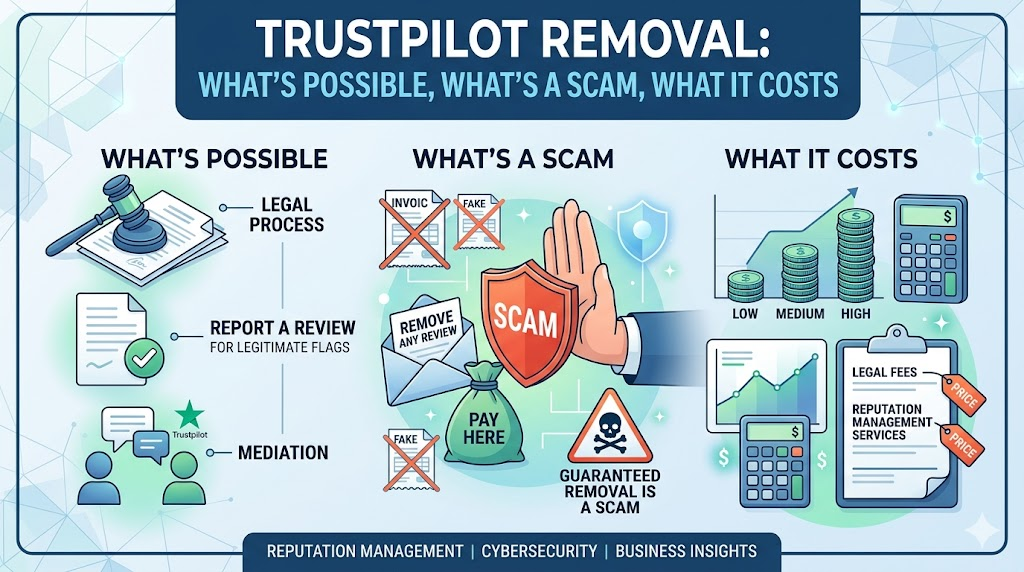
Trustpilot removal: what’s possible, what’s a scam, what it costs?
Trustpilot removal involves understanding legitimate options versus fraudulent schemes and their associated expenses. What’s possible: Businesses can request removal of reviews that violate Trustpilot’s guidelines, such as fake, spam, or illegal content, through their official moderation process at no direct cost. What’s a scam: Third-party services promising guaranteed removal of any review for high fees (often $500-$5000 per review) are typically scams, as they can’t override Trustpilot’s policies and often disappear after payment. What it costs: Official requests are free; avoid paying agencies claiming “VIP removal” services, which exploit desperate sellers without delivering results.
What is possible for Trustpilot removal?
For Trustpilot removal, what’s possible includes flagging reviews for policy violations like spam, harassment, conflicts of interest, or illegal content. Trustpilot’s team reviews these flags and removes qualifying reviews for free. Legitimate actions also involve responding publicly to reviews or improving your business to dilute negative feedback organically. You can’t remove genuine customer experiences just because they’re unfavorable.
What’s a scam in Trustpilot removal services?
Trustpilot removal scams often come from shady agencies or “reputation management” firms advertising on Google or social media, claiming they have insider access to delete any review. They charge exorbitant fees but fail to deliver, as Trustpilot doesn’t allow paid removals outside their guidelines. Red flags include guarantees, no free trials, and pressure tactics-report these to authorities like the FTC.
What does Trustpilot removal cost officially?
Official Trustpilot removal costs nothing; businesses use the free reporting tool in their dashboard to flag ineligible reviews. Trustpilot handles moderation internally without charging. Any service demanding payment for “expedited” or “guaranteed” removal is likely a scam, as confirmed by Trustpilot’s own warnings on their help center.
How to spot scams in Trustpilot removal: what’s possible vs. fake promises?
Trustpilot removal: what’s possible is limited to guideline-violating reviews via free reports. Scams promise removal of legitimate negative feedback, using fake testimonials or urgency. Always verify via Trustpilot’s official guidelines-what’s a scam includes bulk deletion services or hacker claims, which violate terms and risk account suspension.
Trustpilot removal costs: free options and scam pricing traps
Trustpilot removal what’s possible for free: Report violations directly. What it costs beyond that is zero officially, but scams lure with “one-time fees” starting at $100-$10,000, often via untraceable crypto payments. Trustpilot advises against third-parties; focus on compliance and response strategies instead.
Is paid Trustpilot removal ever legitimate, or always a scam?
No paid Trustpilot removal is legitimate- what’s possible stays free through official channels for policy breaches. Services charging for it are scams, as Trustpilot prohibits such practices and bans accounts involved. Save your money; what’s a scam is anything promising otherwise, per Trustpilot’s transparency reports and user forums.




Leave a Reply